The White Spear of the North Sea
Meeting England’s Northern Gannets

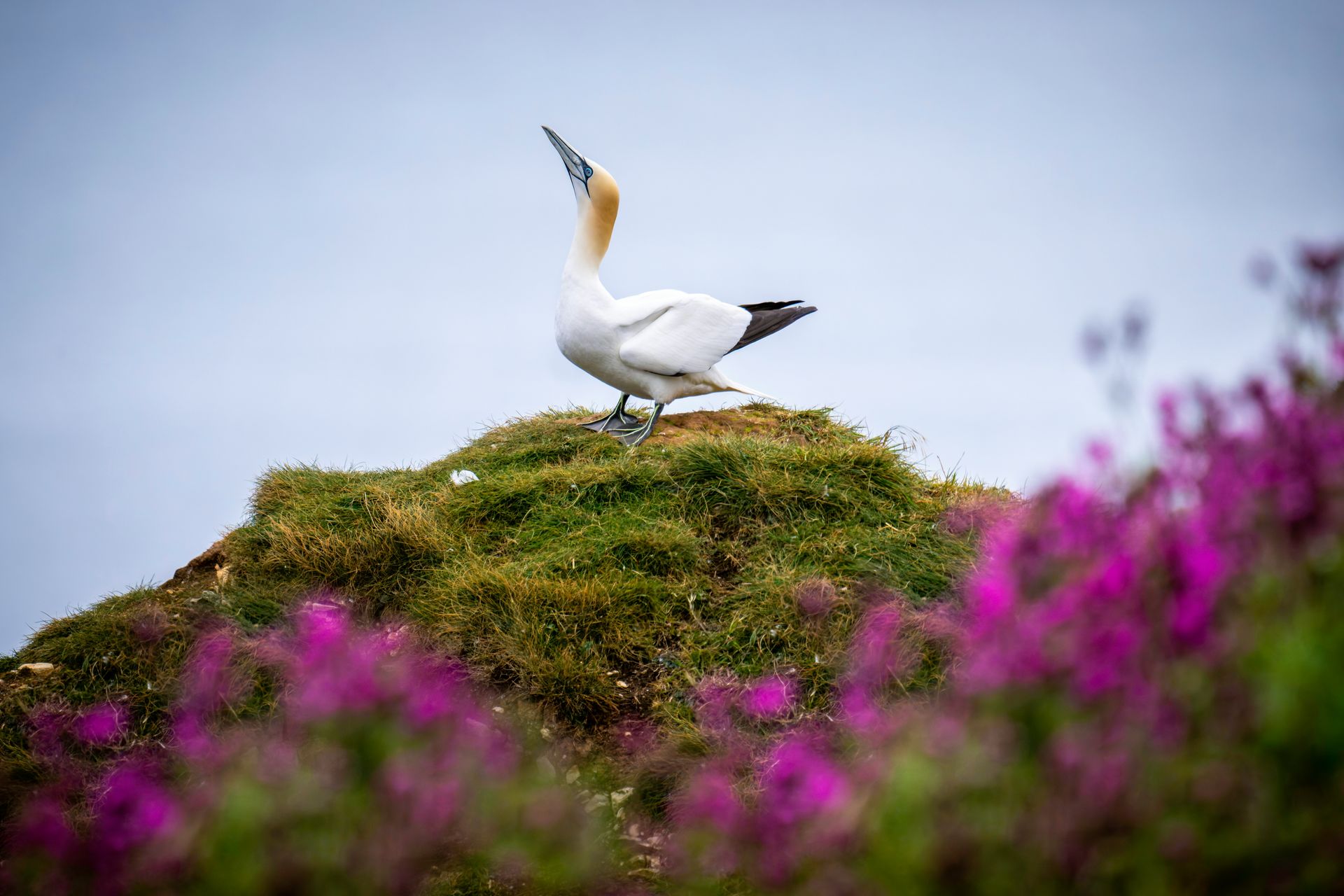
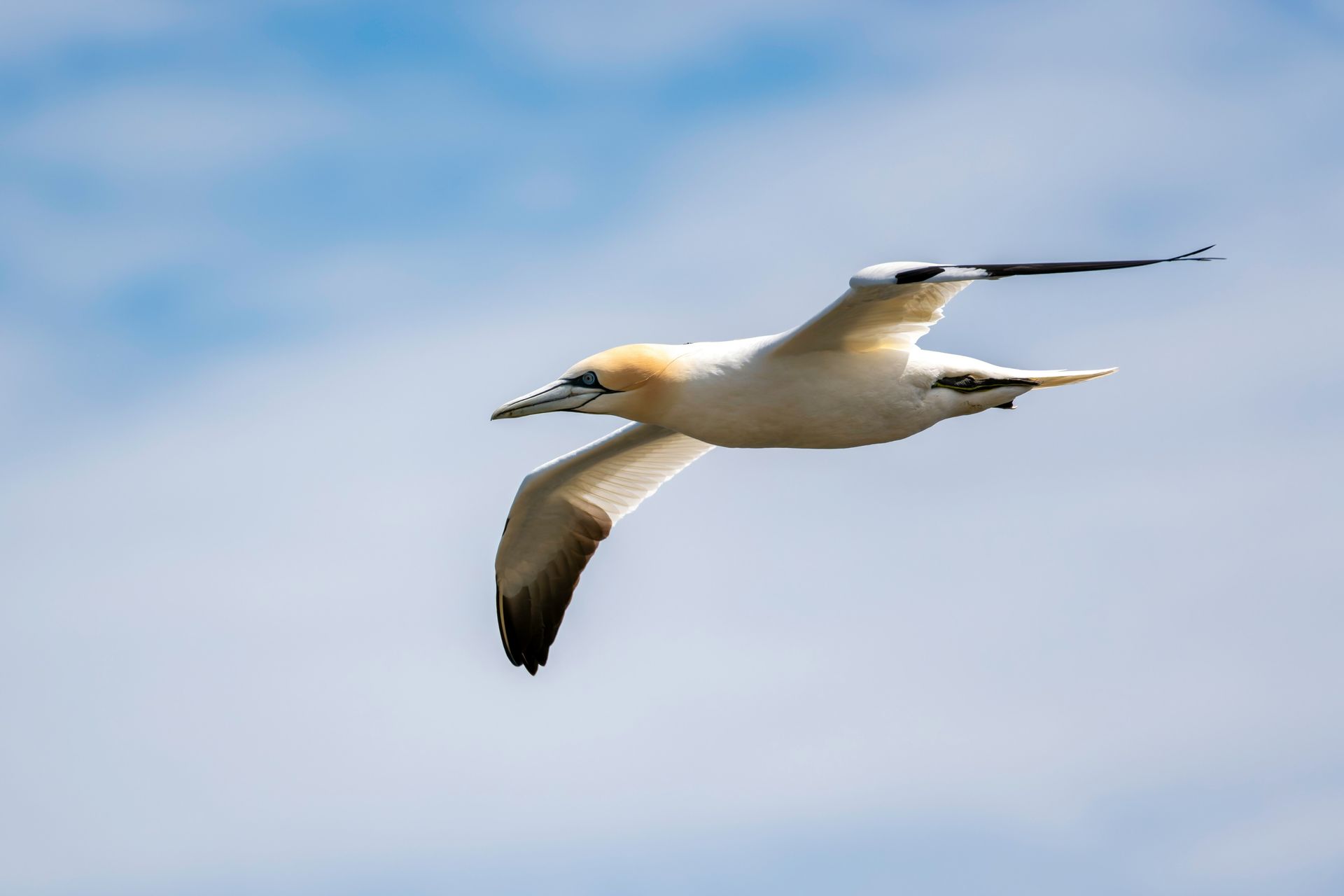
There’s a moment on an English headland when the sea goes glassy, the horizon sharpens, and a great white bird appears as if it’s been sketched in with a single confident line. Long wings, black-tipped like ink-dipped quills, a pale gold wash to the head in summer, and a stare that looks permanently unimpressed by your waterproof jacket.
The Northern gannet is one of those birds that makes even non-birdwatchers point and say, “Blimey, what is that?” And then, almost inevitably, it turns into a falling spear and hits the water with the sort of commitment most of us can only manage when diving into a cold lido on a dare. The Northern gannet, Morus bassanus, is a true heavyweight of the North Atlantic: bright white, streamlined, and built for long-distance efficiency rather than delicate manoeuvres. Adults are easy to recognise once you’ve seen one properly: white body, black wingtips, long pale bill, and that buff-yellow head tint that becomes more noticeable in the breeding season. At sea they have a purposeful flight style too, mixing steady wingbeats with gliding just above the swell, as if the bird is borrowing energy from the wind.
If you’re wondering how a bird so at home on wild Atlantic cliffs became part of the English coastal cast, the answer is that gannets have been on and off our shores for a very long time. There’s a record of a colony on Lundy, off the Devon coast, dating back to the 1200s, but that colony dwindled and disappeared by the early 20th century. In other words, England once had gannets, then didn’t, and now very much does again. The real modern gannet story in England belongs to Yorkshire. Bempton’s gannets didn’t simply arrive one spring in a neat formation and decide to settle; the timeline is more like a cautious doorstep visit that turned into moving in permanently.
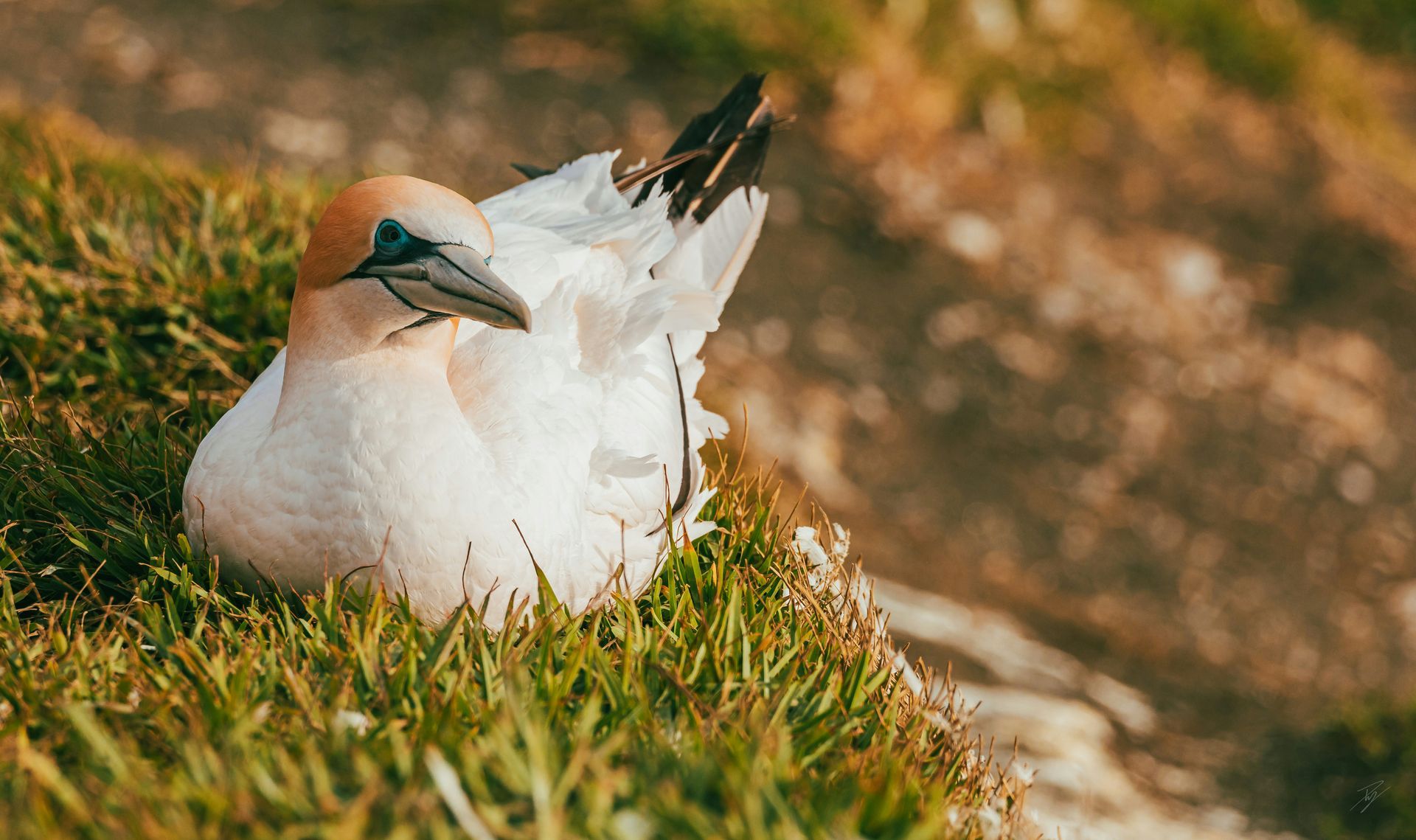

A first recorded nesting attempt was noted in 1924, and the first proven fledging from Bempton wasn’t until 1948. After that, numbers built gradually before the colony’s growth became a genuine success story, helped along by wider population increases across Britain and Ireland recorded through regular seabird censuses and monitoring. Today, the Flamborough and Filey Coast is the place where England does gannets properly. This stretch of chalk cliff hosts huge numbers of breeding seabirds between spring and early autumn, and it’s widely described as the only mainland gannet colony in England.
That “mainland” detail matters, because it makes gannets unusually accessible: you don’t need a boat, a calm sea crossing, or a heroic constitution for swell. You can simply stand at a clifftop viewpoint and watch a seabird that usually prefers offshore stacks and island cliffs go about its day at close range. And what a day it is. Gannets are famously dramatic feeders, hunting by climbing and circling before plunging into the sea. They can hit the water at remarkable speed, then pop back up and swallow their catch with brisk efficiency, like someone finishing a biscuit before you’ve even found your mug. Under the surface, they’re after shoaling fish, and research and diet studies commonly highlight lipid-rich prey such as mackerel and herring, along with smaller fish like sandeels, which can be crucial in the wider marine food web. It’s one of the reasons gannet fortunes are so tied to the health and availability of fish in our seas.
Life in a gannetry is busy, noisy, and surprisingly domestic when you get your eye in. They nest close together, each pair fiercely attached to its tiny patch of cliff ledge, and they’re long-lived birds that don’t rush into adulthood. Studies of gannets commonly note that they only begin breeding once they’re around five years old, after several years of learning the ropes at sea and haunting colony edges like teenagers at a village fête. When they do breed, they raise a single chick, with both parents sharing duties, and classic studies put incubation at roughly 44 days.
Outside the breeding months, gannets don’t simply vanish in a puff of seabird logic; they migrate. Many gannets that breed around the UK spend winter further south, often in the Bay of Biscay and down the west coast of Africa, with some individuals recorded crossing the Equator. That means a gannet you watched over the North Sea in summer may be slicing over warmer Atlantic waters in winter, then returning with the next turn of the season.
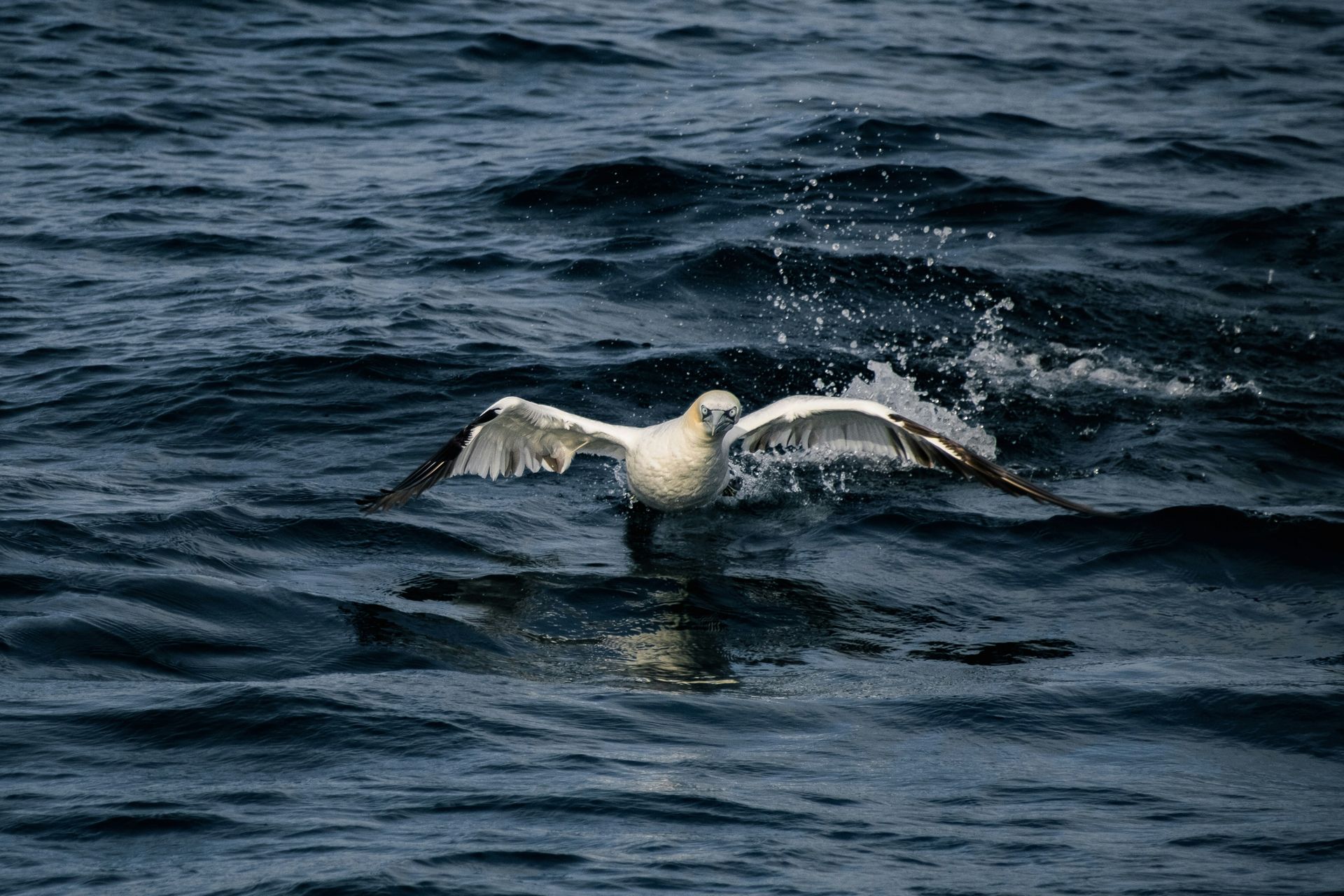
So where, exactly, are your best English chances? If you want the highest certainty and the closest views, aim for Bempton Cliffs and the wider Flamborough and Filey Coast. This coastline is celebrated for its dense seabird colonies, and it’s also one of the easiest places to watch gannets from land without needing binoculars the size of drainpipes. Visit in the breeding season window when cliffs are at their liveliest, and you’ll see gannets commuting in from feeding grounds, birds arriving with beaks full of nesting material, and the constant ebb and flow of life on the ledges.
If you’re after gannets beyond Yorkshire, remember they’re seabirds first and foremost: you can see them from many English coasts as they pass offshore, especially from prominent headlands during good seawatching conditions. But “see” and “see well” are different things. Bempton and Flamborough remain the crowd-pleasers because the birds are there in numbers, the cliffs give you height, and the whole place is set up for watching without turning it into an expedition. It’s also an area recognised for its importance, with protected status and ongoing monitoring work that helps keep tabs on seabird fortunes.
A quick note on being a good guest in gannet country, because the cliffs can be both spectacular and unforgiving. Keep to marked paths and viewpoints, treat cliff edges with proper respect (wind has a habit of changing its mind halfway through your sentence), and avoid anything that might disturb birds at the ledges. That includes letting curiosity pull you closer than you should, and it certainly includes drones, which can cause stress and disruption at seabird colonies. The joy of places like Bempton is that you can get superb views while still giving wildlife the space it needs to get on with the serious business of breeding.
What’s so likeable about Northern gannets is that they feel both ancient and emphatically alive. They are not subtle birds. They arrive with purpose, they fly with conviction, they dive like they mean it, and they raise a single fluffy chick on a ledge that looks utterly unfit for the task. England’s gannets are also a reminder that nature doesn’t only belong in remote places. Sometimes it turns up on a very accessible clifftop, right beside a footpath, and offers you one of the most exhilarating wildlife shows in the country, free of charge, as long as you bring a jacket and the willingness to look up.
Read more: